
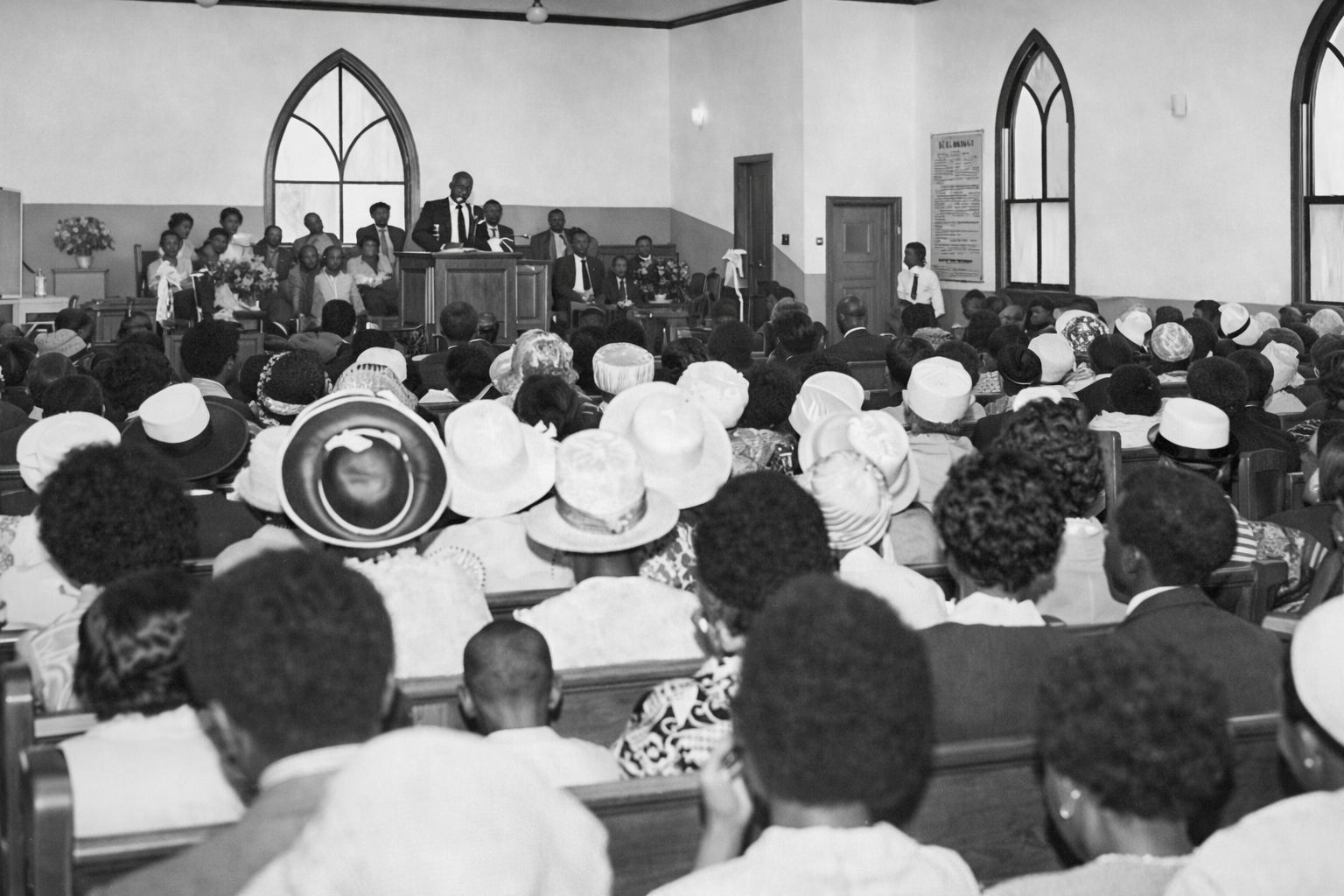
1930s
Humble Beginnings
The history of Abyssinia Baptist Church reflects the power of spiritual guidance and unwavering faith in Jesus Christ. In the early 1930s, during a time of hardship when many families struggled to survive, Brother Material Meaders recognized a need for prayer in his community.
In the spring of 1932, he gathered a small group of believers into a weekly prayer band at his home in Washington, D.C. This group included faithful individuals and families committed to seeking God together. As the group grew, they relocated in 1933 to a larger space, welcoming more believers and leaders who joined in worship and fellowship.
From Prayer Band to Mission
As attendance and spiritual growth increased, the group moved again to a larger location. It was there that the prayer band officially became a mission.
On December 6, 1936, the mission was formally recognized and accepted into the sisterhood of churches. The name Abyssinian Baptist Church was adopted, and Rev. Jesse Witherspoon became the first pastor.
During this time, the church established its first Deacon and Deaconess Boards and began forming its foundational ministries, including Sunday School and missions leadership.
1940s – 1950s
Growth and Establishment
After purchasing its first building, the church later relocated to Deanwood Park, Maryland. A groundbreaking service was held in 1946, and by June 1947, the congregation moved into their new place of worship. In 1948, the church received its Certificate of Incorporation. Under Rev. Witherspoon’s leadership, ministries expanded, with a strong focus on missions and spiritual development. The first 25 years were marked by sacrifice, service, and growth as lives were changed and the church became firmly rooted in its faith. In 1955, the church licensed its first minister, marking a new season of spiritual development.
1957 – 1970s
Leadership Transitions and Expansion
Rev. Leroy Jamison became pastor in 1957, strengthening unity and leadership development within the church. After his tenure, several pastors continued the work, including Rev. James Simmons and Rev. Moses J. Lifsey, who expanded youth ministries and community outreach. In 1969, Rev. Carl L. Headen led the church into deeper community involvement, hosting meetings and addressing social challenges. Following a period of interim leadership, Rev. George E. Davis was called in 1977. Under his leadership, the church experienced significant growth, increased outreach, and a renewed vision for expansion. Land was purchased, and in 1980, the current church building was completed and dedicated.
1980s – 2000s
Milestones and Ministry Impact
The church celebrated its Golden Anniversary in the 1980s, along with the licensing and ordination of several ministers.
In the 1990s, ministries expanded to include prison outreach, prayer services, and increased focus on education and discipleship. A major milestone came in 2001 when the church paid off its mortgage ahead of schedule. The church continued to serve the community through outreach programs, including feeding the homeless, supporting schools, and organizing mission efforts both locally and nationally.
2006 – Present
A New Season of Leadership
After the passing of Rev. Davis in 2004, Dr. Clark A. Houston served as interim pastor. On June 26, 2006, Rev. Dr. Robert W. Trice Jr. was called as the ninth pastor. Under his leadership, Abyssinia has grown in spiritual empowerment, discipleship, and community engagement. New ministries have been developed to strengthen both faith and social awareness within the congregation.
Community Outreach and Ongoing Ministry
Abyssinia remains deeply committed to serving others. The church partners with local organizations to provide meals, clothing, school supplies, and support for families in need.
Programs include feeding the homeless, supporting nursing home residents, school outreach initiatives, and mission projects such as international aid efforts.
Ministries for youth, young adults, and women continue to grow, providing opportunities for discipleship, mentorship, and spiritual development.
Continuing the Mission
Abyssinia recognizes that each generation has a purpose and responsibility to serve. The church remains committed to being a light in the community, not just a place within it. As God continues to lead, the congregation strives to build on its legacy, serve faithfully, and reflect His glory in all that it does.